Home / Cosmetic Gynaecology (Non-Surgical) / Urogynaecology
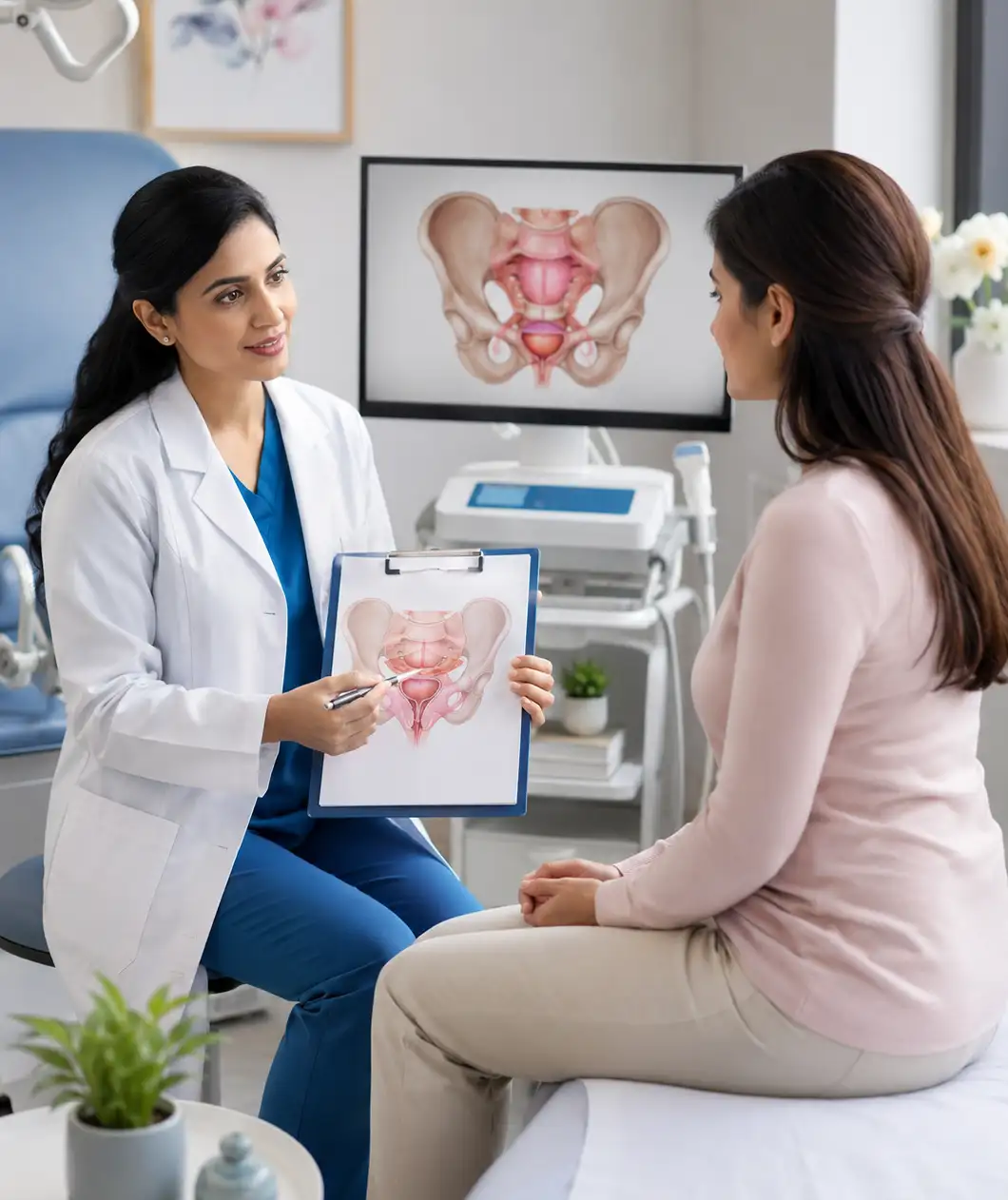
Urogynaecology treatment focuses on diagnosing and managing conditions affecting a woman’s pelvic floor, bladder, and reproductive organs. It addresses concerns like urinary leakage, pelvic organ prolapse, and chronic pelvic discomfort. The goal is to restore control, improve comfort, and help you get back to everyday life without disruption.
Leaks, pressure, discomfort—none of these should be part of your normal. At Petals Health, you get personalised treatment that helps you feel in control again. Schedule a consultation today.




Step-1
A detailed discussion to understand symptoms, medical history, and how they affect daily life.
Step-2
Physical examination, along with tests like ultrasound or urodynamic studies to identify the exact issue.
Step-3
A personalised plan is created based on the diagnosis, severity, and individual lifestyle needs.
Step-4
Treatment may begin with medications, pelvic floor therapy, or simple procedures, depending on the condition.
Step-5
For severe cases, corrective procedures are performed to restore pelvic support and bladder function.
Step-6
Regular follow-ups and guidance to ensure proper healing and long-term results.
Mild discomfort, slight swelling, or fatigue may be noticed, with rest and basic care helping in early recovery.
Daily activities can gradually resume, though strenuous movements and heavy lifting should still be avoided.
Noticeable improvement in symptoms, with better bladder control and reduced pelvic discomfort.
Healing continues steadily, and most normal routines can be resumed with minimal restrictions.
Full recovery is typically achieved for most treatments, with improved comfort, control, and confidence in daily life.


From the Desk of PDG | Honorary Medical Director
Welcome to Petals Health Clinics, a modern family clinic chain designed around Families.
As your partners in health, we take pride in fostering a warm, family-centred environment where every individual feels heard, respected, and cared for.
Our primary focus is on building and sustaining healthy families. We believe that prevention is the cornerstone of good health, and we are dedicated to helping you take proactive steps toward a vibrant and fulfilling life. Through preventive healthcare, regular disease screenings, early detection, and health education, we strive to empower you with the knowledge and tools to make informed decisions about your well-being.
Whether it’s routine checkups, guidance on managing chronic conditions, or personalized advice on lifestyle and wellness, our team is here to partner with you on every step of your health journey.
Thank you for trusting us to be a part of your family’s health story. Together, we can build a foundation for lasting health and happiness.



 Ask a Doctor
 9147405955