Book a Service

Home / Infertility Treatment / IVF

What is IVF Treatment?

IVF treatment is a fertility procedure where eggs and sperm are combined outside the body in a lab to create an embryo. The healthy embryo is then placed inside the uterus to support pregnancy. It is often recommended for couples facing blocked tubes, low sperm count, ovulation issues, endometriosis, or unexplained infertility.

When nature needs a little nudge, science knows how to step in gently. At Petals Health, couples receive personalised IVF guidance, fertility evaluation, and supportive care at every step of the journey. Book a consultation today.


Types of IVF Treatment

Conventional IVF

  • Eggs and sperm are combined in a lab dish.
  • Fertilisation happens naturally outside the body.
  • Often suggested when sperm quality is fairly normal.
  • Suitable for many common fertility concerns.

IVF with ICSI

  • A single healthy sperm is directly injected into the egg.
  • Commonly recommended for low sperm count or poor sperm movement.
  • Helps when previous IVF fertilisation has failed.
  • Useful in male infertility cases.

Natural Cycle IVF

  • Uses the egg naturally released during the menstrual cycle.
  • Involves little or no fertility medication.
  • Suitable for women who want a gentler treatment approach.
  • Usually collects fewer eggs than conventional IVF.

Mild Stimulation IVF

  • Uses lower doses of fertility medicines.
  • Aims to collect a smaller number of good-quality eggs.
  • May reduce discomfort and medication-related side effects.
  • Often preferred by women who want a less intense IVF process.

Donor Egg IVF

  • Uses eggs from a healthy donor.
  • Suggested when egg quality or egg reserve is low.
  • May help women with repeated IVF failure or early menopause.
  • The embryo is transferred into the intended mother’s uterus.

Donor Sperm IVF

  • Uses sperm from a screened donor.
  • Recommended when sperm is absent or severely affected.
  • May be considered in certain male infertility cases.
  • Donor selection and screening are done carefully.

Frozen Embryo Transfer

  • Uses embryos frozen from a previous IVF cycle.
  • The embryo is thawed and transferred into the uterus.
  • Helps avoid repeating the full egg collection process.
  • Often planned after the uterus is prepared for implantation.

IVF with Genetic Testing

  • Embryos are tested before transfer.
  • Helps identify chromosomal or genetic concerns.
  • May be advised for recurrent miscarriages or failed IVF cycles.
  • Supports informed embryo selection before pregnancy.

Is Your Fertility Journey Ready for IVF Support? Get to know with Our Quiz

Question 1 of 6

Why Choose Petals Health?

    ✓ High Success Rate
    ✓ Safer Pregnancy Journey
    ✓ 10+ Years of Specialisation
    ✓ World-Class Facilities & Laboratory
    ✓ 1000+ Successful Pregnancies
    ✓ Affordable IVF Packages
    ✓ Treatment for Single Parents & LGBTQ+ Couples
    ✓ Experienced Embryologists
    ✓ 24/7 Patient Support

Step-by-Step Guide to IVF Treatment

Step-1

Fertility Evaluation

The doctor checks medical history, hormone levels, ultrasound findings, cycle pattern, and semen analysis reports.

Step-2

Ovarian Stimulation

Fertility medicines are given to help the ovaries produce multiple mature eggs in one cycle.

Step-3

Cycle Monitoring

Ultrasounds and blood tests track follicle growth and help decide the right collection time.

Step-4

Egg Retrieval

Mature eggs are collected from the ovaries through a short procedure under medical supervision.

Step-5

Sperm Preparation

A sperm sample is collected, processed, and checked to select healthy, active sperm.

Step-6

Lab Fertilisation

Eggs and sperm are combined in the lab, or ICSI is used when needed.

Step-7

Embryo Development

Fertilised eggs are observed for a few days as they grow into healthy embryos.

Step-8

Embryo Transfer

A selected embryo is gently placed inside the uterus using a thin, soft catheter.

Step-9

Pregnancy Test

A blood test is done after 10 to 14 days to check implantation.

Step-10

Follow-Up Care

The doctor reviews the result and guides the medicines, precautions, and the next steps.

Recovery Timeline after IVF Treatment

First 24 Hours

Mild cramping, bloating, spotting, or tiredness may be felt after embryo transfer.

Day 2 to Day 5

Light rest is advised, but normal routine activities can slowly resume.

Day 6 to 10

Some women may notice mild breast tenderness, mood changes, or pelvic heaviness.

Day 10 to 14

A blood pregnancy test is usually done to check if implantation has happened.

After Positive Test

Medicines, follow-up scans, and pregnancy care continue as advised by the doctor.

After the Negative Test

The doctor reviews the cycle and suggests the next suitable fertility plan.
Risks & Safety Measures

Risks

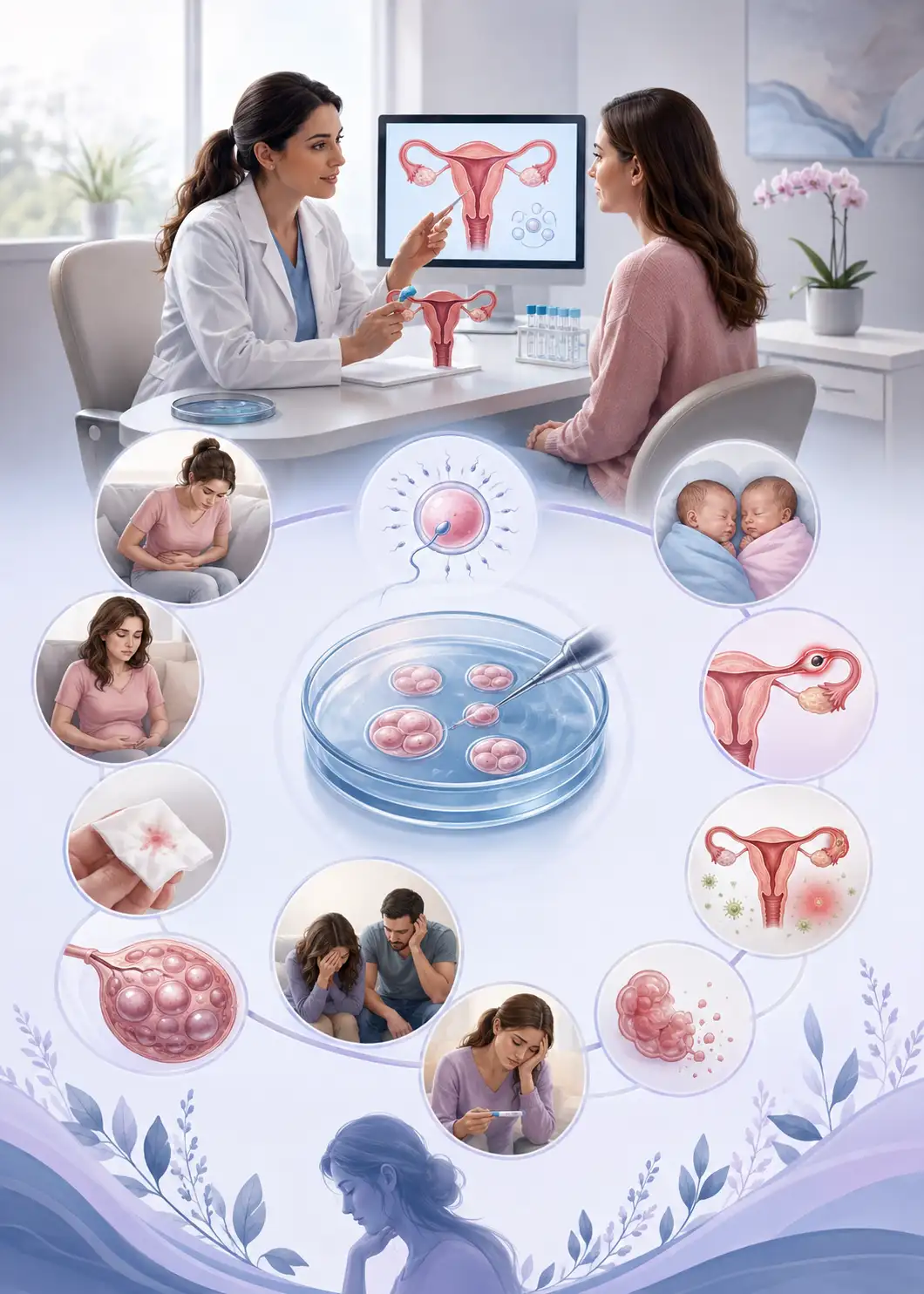
  • Mild cramping or pelvic discomfort may happen after egg retrieval or embryo transfer.
  • Bloating, heaviness, or temporary abdominal discomfort may occur due to fertility medicines.
  • Light spotting may be noticed after the embryo transfer or procedure.
  • Ovarian hyperstimulation syndrome may develop in some cases when the ovaries respond strongly to medicines.
  • Multiple pregnancy may happen if more than one embryo implants.
  • Ectopic pregnancy is rare, but the embryo may implant outside the uterus.
  • Infection or bleeding after egg retrieval is uncommon but possible.
  • Mood swings, stress, or emotional ups and downs may happen during the waiting period.
  • IVF may not always result in pregnancy in the first cycle, and repeat attempts may be needed.
  • Early pregnancy loss can still happen, even after a positive test.

Safety Measures

  • Take all prescribed medicines exactly as advised by the fertility specialist.
  • Avoid heavy lifting, intense workouts, running, or strenuous household work for a few days.
  • Continue light daily activities unless the doctor specifically advises complete rest.
  • Drink enough water and include balanced, protein-rich meals in your routine.
  • Avoid smoking, alcohol, and unnecessary self-medication during the waiting period.
  • Do not take painkillers, hormonal medicines, or herbal supplements without medical approval.
  • Watch for severe abdominal pain, heavy bleeding, fever, dizziness, or unusual bloating.
  • Avoid stress overload as much as possible; the two-week wait is already dramatic enough.
  • Follow the doctor’s advice on sexual activity after embryo transfer.
  • Attend follow-up appointments and take the pregnancy blood test on the advised date.

Frequently Asked Questions

Mild cramping, bloating, or light spotting can happen after embryo transfer. However, severe pain, heavy bleeding, or fever should be reported quickly.
A blood pregnancy test is usually advised around 10 to 14 days after embryo transfer. Testing too early may give confusing results.
Short and comfortable travel may be allowed, but long journeys should be discussed with your doctor. Avoid anything that causes stress or physical strain.
Light spotting may happen after embryo transfer and is not always a warning sign. Heavy bleeding or severe cramps should be checked by a doctor.
Call the doctor if there is heavy bleeding, severe pain, fever, dizziness, vomiting, or unusual swelling. These symptoms should not be ignored.

Book a Consultation

    Phone WhatsApp WhatsApp Email