Book a Service

Home / Family Medicine / Urology

What is Urology Treatment?

Urology treatment focuses on diagnosing and treating conditions related to the urinary tract and male reproductive system. This includes issues with the kidneys, bladder, prostate, and urethra, as well as conditions like urinary incontinence, kidney stones, and erectile dysfunction. Urologists provide both medical and surgical care tailored to each individual’s needs.

Whether you’re dealing with common concerns like frequent urination or more complex issues, getting the right treatment is crucial for your overall well-being. At Petals Health, we offer expert urological care personalised to your needs. Book a consultation today and take the first step toward better health.

Types of Urology Treatments

Cystoscopy

  • A flexible tube with a camera is inserted into the bladder through the urethra.
  • Used to diagnose conditions like bladder infections, stones, or tumours.
  • Helps in identifying and sometimes treating abnormalities such as bladder cancer or blockages.

Prostate Surgery (TURP)

  • Transurethral resection of the prostate (TURP) is a common surgical treatment for benign prostatic hyperplasia (BPH).
  • Removes excess prostate tissue that may obstruct urine flow.
  • Often recommended for men with moderate to severe symptoms of an enlarged prostate.

Kidney Stone Removal

  • Methods like shock wave lithotripsy (SWL) or ureteroscopy are used to remove or break down kidney stones.
  • SWL uses sound waves to break up stones, making them easier to pass.
  • Ureteroscopy involves inserting a thin tube through the urethra to remove stones, especially those in the ureter.

Bladder Augmentation

  • A surgical procedure that increases the size of the bladder using a piece of the intestine.
  • Used in cases of bladder dysfunction, such as neurogenic bladder or severe incontinence.
  • Helps patients who have lost the ability to store urine normally due to bladder disease or injury.

Meet Our Urologist

Dr. P. S. Mahapatra

Dr. P. S. Mahapatra

MBBS.MS.DNB | MONDAY

DR SHASHI KANT TEWARY

DR SHASHI KANT TEWARY

MBBS, DA, M.S, M Ch | WED/THURS 6PM-7PM(BY APPOINTMENT)

DR. S M BOSE

DR. S M BOSE

FICS (USA) MS(cal) | By Appoinment

DR. TAHZEEB ALAM

DR. TAHZEEB ALAM

| By Appoinment

How Healthy is Your Urinary System? Find Out Now

Question 1 of 6

Why Choose Petals Health?

    ✓ Immediate Support from Specialists
    ✓ Seamless Treatment Journey
    ✓ 24/7 Emergency Care
    ✓ Advanced Diagnostics
    ✓ Affordable packages
    ✓ Same-day appointments

Step-by-Step Guide to Urology Treatment

Step-1

Initial Consultation

Discuss symptoms, medical history, and lifestyle to help the urologist understand your condition.

Step-2

Diagnosis

Undergo tests like urine analysis, ultrasound, or cystoscopy to pinpoint the issue.

Step-3

Treatment Plan Development

The urologist creates a tailored treatment plan based on your diagnosis.

Step-4

Medications & Therapies

Medications or non-invasive therapies are prescribed to manage or treat the condition.

Step-5

Surgical Procedures (if necessary)

Surgery may be required to remove blockages or correct abnormalities if needed.

Step-6

Follow-up Care

Advanced techniques like IUI, IVF, or ICSI to enhance the chances of conception.

Recovery Timeline after Urology Treatment

Day 1-2

Mild discomfort, rest, and follow medication instructions.

Day 3-7

Swelling may persist; return to light activities, avoid strenuous exertion.

Week 2-4

Discomfort decreases, resume normal activities with care.

1-3 Months

Full recovery expected, though mild tenderness may linger.
Risks & Safety Measures

Risks

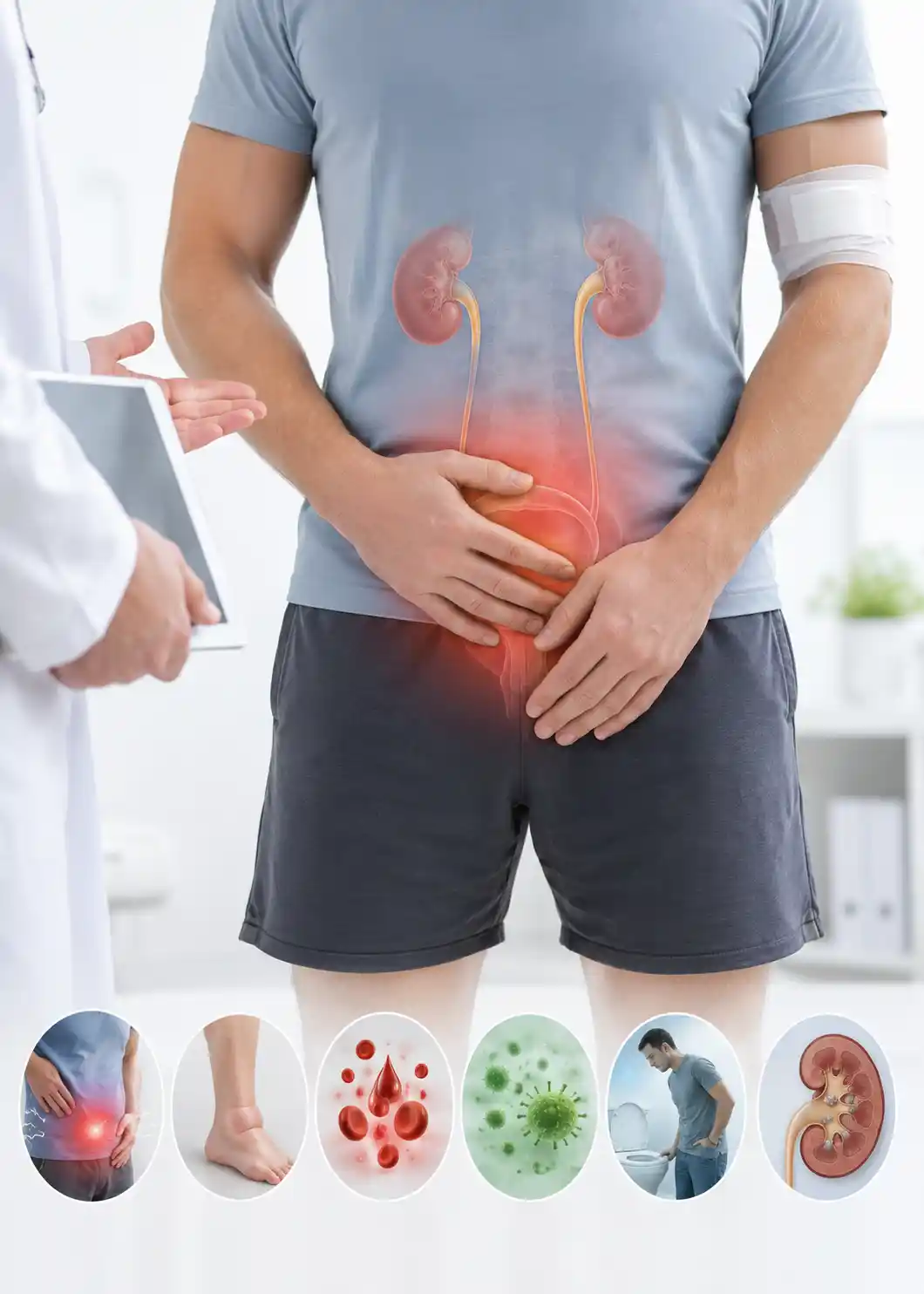
  • Infection at the surgical site or urinary tract
  • Bleeding, especially after prostate surgery or kidney stone removal
  • Mild to moderate pain or discomfort
  • Swelling or bruising in the treated area
  • Difficulty urinating, incontinence, or urgency
  • Scar tissue formation, potentially causing long-term discomfort
  • Blood in the urine, particularly in the early days post-procedure
  • Temporary or permanent erectile dysfunction after procedures like prostate surgery
  • Risk of recurrent kidney stones after treatment

Safety Measures

  • Follow prescribed medications, including antibiotics and pain relievers, to prevent infection and manage discomfort.
  • Drink plenty of fluids to help flush the urinary tract and reduce the risk of infection.
  • Rest and avoid strenuous activities for the first few days to promote healing.
  • Use ice packs on the treated area to reduce swelling and bruising.
  • Avoid heavy lifting or vigorous exercise for at least 2–4 weeks post-treatment.
  • Maintain a healthy diet to support recovery and avoid constipation.
  • Attend follow-up appointments to monitor progress and detect any complications early.
  • Practice good hygiene, especially when managing urinary catheters or surgical sites.
  • Monitor for signs of infection, such as fever, increased pain, or unusual discharge, and contact your doctor if they occur.

Frequently Asked Questions

Pain management involves prescribed pain relievers, rest, ice packs, and avoiding strenuous activities. Always follow your doctor’s instructions for optimal recovery.
It depends on the procedure. You should wait for your doctor’s approval, usually after the initial recovery period, to ensure full healing and avoid complications.

Drink plenty of water, follow a balanced diet low in salt and high in fruits and vegetables, and avoid foods that promote stone formation, such as those high in oxalates.
Yes, treatments like medication, lifestyle changes, and non-invasive procedures like shockwave therapy or laser treatment may be effective, depending on the condition.
Some urology treatments, especially those involving the prostate or testes, can impact fertility. Your doctor will discuss any potential effects and fertility preservation options if necessary.

Book a Consultation

    Phone WhatsApp WhatsApp Email