January 8, 2026 | by Admin

A child reaching for water repeatedly, visiting the bathroom often, or feeling unusually exhausted. Many parents notice these changes daily, yet rarely connect them to diabetes risk. West Bengal’s ‘4T’ diabetes awareness campaign was launched to change that dangerous oversight. The campaign (Source) highlights four early warning signs in children using a simple memory cue. Those four signs are Toilet, Thirsty, Tired, and Thinner, which often appear harmless. In busy Kolkata households, these everyday changes are easily blamed on routines, growth, or stress. The 4T message warns that childhood diabetes is rising and early attention matters more. Lifestyle shifts, reduced activity, irregular eating, and screen-heavy habits quietly increase diabetes risk.
This blog explains what the 4T signs mean and how timely checks protect children. It also shows how Petals Family Clinic supports families through gentle evaluations and personalised guidance.

The “4T” campaign makes it easier for families to detect diabetes. Doctors use this tool to help parents recognise early symptoms in kids. The four signs include:
Each “T” warns parents about abnormal blood sugar levels. When children show these signs often, they need quick attention.
But here is the problem. Many parents ignore these signs because they look harmless. “Maybe it’s the heat.” “Maybe it’s school stress.” “Maybe they didn’t sleep well.” These assumptions delay proper care.
In the city, childhood routines have changed faster than most families realise.
Evenings once spent playing cricket in para lanes now disappear into traffic-tired commutes and packed tuition schedules.
After long school hours, children rush from buses to coaching centres, often eating fried snacks from local stalls.
Physical activity shrinks while screen time grows, especially in small apartments with limited outdoor space.
Sleep patterns suffer in the late-night culture. Homework, exam preparation, and mobile use stretch well past bedtime, even on school nights.
Besides these, irregular meal timings and carb-heavy comfort foods also make it harder for the body to cope.
Stress quietly settles in early. Board exam pressure, competitive entrance goals, and constant academic comparison affect children younger than before.
Over time, these specific lifestyle patterns increase insulin imbalance and raise diabetes risk early.
The ‘4T’ campaign shows how these risks appear through small, everyday changes.
Frequent toilet breaks during school, constant thirst, unexplained tiredness, or sudden thinning feel normal here.
That normalisation is why many families miss early warning signs of diabetes until the condition progresses.
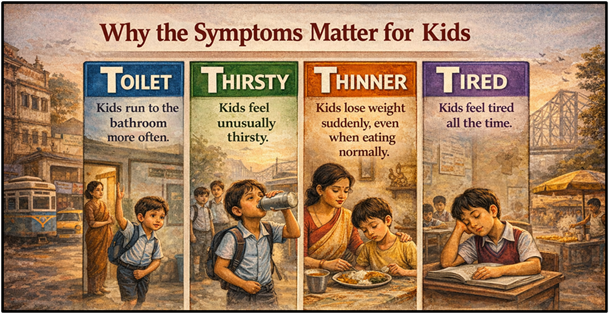
Kids run to the bathroom more often. Parents often think it’s due to more water intake. But diabetes causes excess sugar in the blood. The body pushes sugar out through urine. The bladder fills faster.
Kids feel unusually thirsty. They drink water again and again. This is because the body loses fluid through frequent urination. The body demands more water to balance the loss.
Kids lose weight suddenly, even when eating normally. The body fails to use sugar correctly. So it breaks down fat and muscle for energy. This causes weight loss with no effort.
Kids feel tired all the time. They look dull in class. They struggle to focus. They feel sleepy often. This happens because their cells don’t get enough energy from sugar.
These four signs often appear together. Early attention prevents complications, infections, weakness, and long-term health issues.
| Habit | Risk Level | Why It Matters |
| Long screen time | High | reduces activity and increases weight |
| Junk food intake | High | pushes sugar levels up quickly |
| Low water intake | Medium | weakens metabolism |
| Poor sleep | Medium | disrupts hormones |
| No outdoor play | High | lowers energy use |
Type 1 vs Type 2 Diabetes in Children
Children may develop two forms:
The body stops producing insulin. Kids need insulin support. Symptoms appear quickly. Early signs match the “4T” list.
The body makes insulin but cannot use it correctly. It grows slowly. Childhood obesity increases this risk. Many parents miss the signs because the symptoms stay mild in the beginning.
Early screening helps doctors identify the correct type and plan proper treatment.
Petals Family Clinic helps families understand symptoms and manage early signs safely.
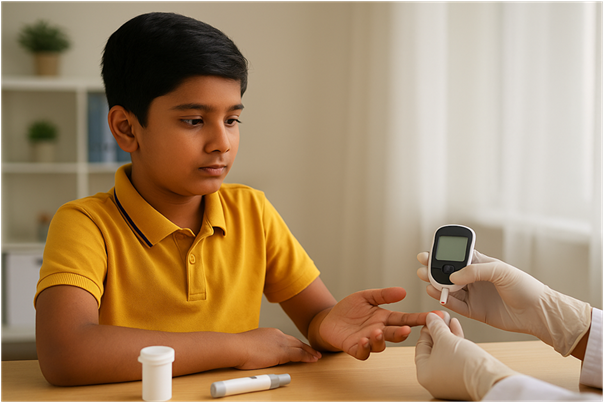
The clinic offers:
Doctors follow a step-by-step approach. They explain every result in simple terms. They help parents set up routines that protect children long-term. Their guidance supports children who show “4T” symptoms and need monitoring.
You can help your child with small changes:
These steps support healthy sugar levels and better energy.
When parents act early, children stay healthier. Early check-ups prevent:
Doctors help parents understand the exact risk level. They guide families with simple routines that protect long-term health.
Parents should visit a doctor if their child shows:
Petals Family Clinic helps identify the cause early. Their team supports children with gentle care and simple guidance.
| Symptom | What It Means | When to Act |
| Toilet | sugar loss through urine | act if frequent |
| Thirsty | dehydration due to sugar loss | act if constant |
| Thinner | weight loss without effort | act quickly |
| Tired | low energy levels | act if daily |
The message stays simple:
Spot early. Act early. Protect early.
Children hide symptoms. They don’t express discomfort. Parents must observe small changes. The “4T” tool helps parents recognise emerging patterns.
Children get scared when they hear the word “diabetes.”
Parents can support them by:
Emotional support improves health outcomes.
Diabetes grows quietly. Kids adjust to discomfort. They ignore thirst, sleep more, lose weight, and feel tired. Parents must act early.
Petals Family Clinic supports early steps with expert care and simple solutions.
Kolkata families can protect children with simple awareness. The “4T” signs help parents act early. Healthy habits lower risk. It’s easier to manage diabetes when detected early.
If your child shows frequent “4T” symptoms or sudden changes, visit Petals Family Clinic, the trusted multi-speciality health clinic in Kolkata.
Their doctors offer gentle evaluation, clear advice, and personalised child care.
Your child deserves early protection and your family deserves safe guidance.
Start your child’s health journey with confidence today. Reach out to our clinics across Kolkata for comprehensive guidance.
Urban lifestyle patterns like high-carb diets and low activity increase risk. Long screen hours and rising childhood stress make the problem worse.
It teaches parents to recognise early warning signs of diabetes quickly. The campaign helps families act before symptoms grow serious.
Yes, early symptoms improve with simpler lifestyle changes and timely care. Active routines and balanced meals support better sugar control.
Their team provides early screening, growth checks, and personalised guidance. They help families manage symptoms with simple, child-friendly steps.
Parents should act if signs like fatigue, thirst, or weight loss persist. Early check-ups help doctors detect issues before they worsen.
Fitness
Health Clinic
Gynecology
Pregnancy
Diabetes
Health
Paediatrics
Health Tips
Arthritis
Allergy and Asthma
Menstrual Health
general
other
Cardiology
Geriatrics
Gastrointestinal
woman and child care
Infertility
Health Checkup
Cosmetic Gynaecology
Hymenoplasty
dermatology treatments
IVF Treatment
Fertility Treatment
Vaginal Rejuvenation
Vaginal Tightening
Aesthetic Treatment

From the Desk of PDG | Honorary Medical Director
Welcome to Petals Health Clinics, a modern family clinic chain designed around Families.
As your partners in health, we take pride in fostering a warm, family-centred environment where every individual feels heard, respected, and cared for.
Our primary focus is on building and sustaining healthy families. We believe that prevention is the cornerstone of good health, and we are dedicated to helping you take proactive steps toward a vibrant and fulfilling life. Through preventive healthcare, regular disease screenings, early detection, and health education, we strive to empower you with the knowledge and tools to make informed decisions about your well-being.
Whether it’s routine checkups, guidance on managing chronic conditions, or personalized advice on lifestyle and wellness, our team is here to partner with you on every step of your health journey.
Thank you for trusting us to be a part of your family’s health story. Together, we can build a foundation for lasting health and happiness.



 Ask a Doctor
 9147405955


