February 23, 2026 | by Admin

Repeated fever is often treated casually, especially when it settles temporarily with medication. Many people assume that as long as the temperature comes down, there is no serious concern, even if the fever returns after a short gap.
Doctors at Petals Family Clinic, a diagnostic centre in Kolkata, regularly see patients whose evaluation is delayed. Later, they discovered that the fever was linked to an unresolved condition.
If the fever keeps returning, it’s time to pay attention. This blog explains when to act and why medical guidance matters.
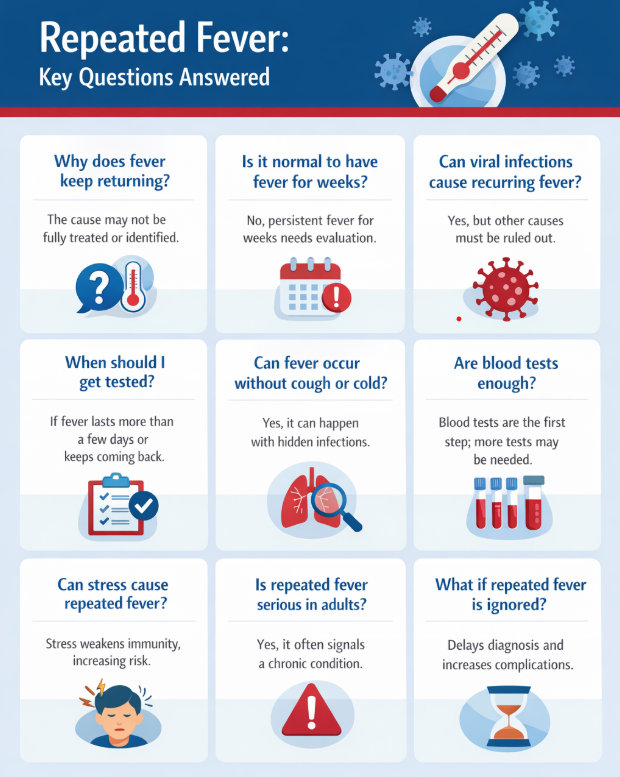
A recurrent fever means the original cause was not fully identified or treated. Temporary relief from medicines lowers temperature but does not eliminate infection, inflammation, or immune dysfunction.
These eventually lead to recurrent fever episodes.
Yes, a recurrent fever can become dangerous when it persists without proper evaluation. The risk increases when fever affects daily functioning, appetite, or overall energy levels.
Doctors consider a persistent fever in adults a warning sign because it may indicate infection, autoimmune disorder, or systemic inflammation. Delaying diagnosis can allow these conditions to progress silently.
Most common infections resolve within a few days. A medical evaluation becomes important when the fever does not follow the expected course.
A fever lasting more than a week often points toward deeper chronic fever causes, especially when associated with fatigue or weight loss. A recurrent fever without a cold or cough usually requires laboratory testing rather than observation.
A low-grade fever that persists for weeks should not be ignored. It commonly reflects ongoing inflammation or immune activation.
Doctors consider a low-grade fever for weeks (Source) a significant finding, particularly when routine treatment fails. In such cases, the condition may be labelled as a fever of unknown origin until investigations reveal the cause.
Recurring fever is rarely random and often follows a recognisable pattern. Doctors assess the duration, frequency, and associated symptoms to narrow down the possibilities.
Causes may include an infection, inflammatory diseases, or immune disorders (Source). Differentiating viral vs bacterial fever is essential to avoid unnecessary or delayed treatment.
Blood testing is the most effective first step for evaluation. It provides objective information about infection, inflammation, and immune activity.
A blood test for fever diagnosis usually includes a Complete Blood Count (CBC) (Source) and tests for inflammatory markers, along with targeted infection screening.
You can reach out to Petals Family Clinic, a trusted diagnostic centre in Kolkata, for accuracy and reliability.
Hidden or chronic infections often do not produce obvious early symptoms, which is why they can go unnoticed for weeks or even months. In many cases, fever may be the only consistent sign, while routine treatments temporarily reduce temperature without addressing the underlying cause.
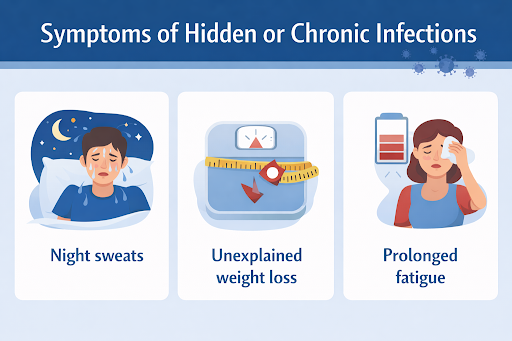
Conditions like autoimmune disease may present similarly and require careful exclusion.
Stress alone rarely causes fever, but it can weaken immune responses. Low immunity increases susceptibility to infections and inflammatory flare-ups.
Doctors assess immune health when managing unexplained fever, particularly after infections are ruled out. Stress may worsen symptoms, but immune dysfunction usually drives repeated fever.
Evaluation follows a stepwise, evidence-based approach. Doctors avoid assumptions and rely on structured testing.
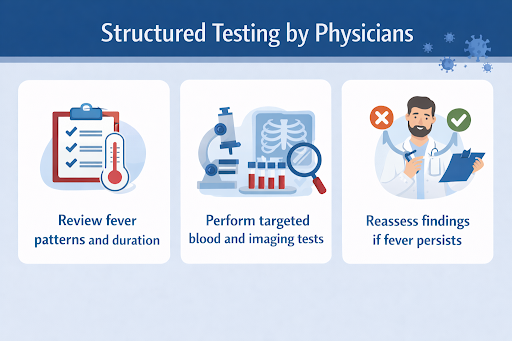
This systematic approach reduces missed diagnoses.
| Situation | Action |
| Fever for 1–2 days | Observe |
| Fever recurring weekly | Test |
| Fever with weight loss | Immediate testing |
| Fever unresponsive to medication | Full evaluation |
Delaying diagnostic testing allows the disease to progress unnoticed. Early evaluation improves recovery rates and reduces complications.
Timely investigation of prolonged fever leads to better outcomes. Early testing at a diagnostic centre prevents unnecessary delays in treatment.
Repeated fever should not be managed solely with medication. It often reflects an unresolved medical issue that requires proper evaluation. Early testing provides clarity, prevents complications, and supports timely treatment decisions.
Seek a comprehensive evaluation at our diagnostic centre in Kolkata for appropriate medical guidance.
Fever may return if the underlying cause is not fully treated or identified. Medicines can reduce temperature temporarily but may not address infections, inflammation, or immune-related conditions.
No. Repeated fever over weeks is not considered normal and usually requires medical evaluation to identify the underlying cause.
Yes. Some viral infections can cause prolonged or recurring fever, especially if the immune response is delayed or weakened, though bacterial and inflammatory causes must be ruled out.
Testing is recommended if fever lasts more than a few days, keeps returning, or is associated with fatigue, weakness, weight loss, or night sweats.
Yes. Fever without respiratory or digestive symptoms can occur in conditions such as tuberculosis, autoimmune disorders, or other hidden infections.
Blood tests are usually the first and most important step, as they help detect infection, inflammation, and immune abnormalities. Additional tests may be required based on results.
Stress by itself rarely causes fever, but long-term stress can weaken immunity, making the body more vulnerable to infections or inflammatory responses.
Repeated fever in adults is often taken more seriously because it is more likely to be linked to chronic infections, inflammatory diseases, or systemic conditions.
Yes. Some infections may not show clear early signs and can present only as repeated or prolonged fever, making focused testing essential for diagnosis.
Fever may return if the infection was not fully treated, the bacteria are resistant, or the actual cause is not bacterial, requiring further investigation.
No. Some chronic or low-grade infections may not be clearly evident on basic tests and may require specialised investigations or imaging to be identified accurately.
Ignoring repeated fever can delay diagnosis, allow disease progression, and increase the risk of complications. Early evaluation improves outcomes and shortens recovery time.

From the Desk of PDG | Honorary Medical Director
Welcome to Petals Health Clinics, a modern family clinic chain designed around Families.
As your partners in health, we take pride in fostering a warm, family-centred environment where every individual feels heard, respected, and cared for.
Our primary focus is on building and sustaining healthy families. We believe that prevention is the cornerstone of good health, and we are dedicated to helping you take proactive steps toward a vibrant and fulfilling life. Through preventive healthcare, regular disease screenings, early detection, and health education, we strive to empower you with the knowledge and tools to make informed decisions about your well-being.
Whether it’s routine checkups, guidance on managing chronic conditions, or personalized advice on lifestyle and wellness, our team is here to partner with you on every step of your health journey.
Thank you for trusting us to be a part of your family’s health story. Together, we can build a foundation for lasting health and happiness.



 Ask a Doctor
 9147405955


