February 28, 2026 | by Admin

White discharge is something most women notice often and rarely discuss openly. Sometimes it feels harmless, and at other times, the amount or change makes them pause and worry.
30% of women in India experience vaginal discharge (Source).
At Petals Family Clinic, our gynaecology treatment clinic in Kolkata, women often ask, “Is this normal, or is something wrong?”
Understanding the difference between what’s normal and what’s not can protect your comfort and long-term health.
White discharge is often a healthy sign. It helps the vagina stay clean and protected. Daily discharge that appears clear or milky, has a mild odour, and causes no discomfort is normal.
This is commonly called leukorrhea, a term that refers to natural vaginal discharge during reproductive years.

| Feature | Normal White Discharge | When It May Signal a Problem |
| Colour | Clear to milky white | Yellow, green, grey, or curd-like |
| Smell | Mild or odourless | Strong, fishy, or foul smell |
| Texture | Thin, sticky, or creamy | Thick, frothy, or clumpy |
| Sensation | No discomfort | Itching, burning, irritation |
| Frequency | Varies through the cycle | Sudden increase with symptoms |
33%-47% women experience abnormal vaginal discharge due to Bacterial Vaginosis. While 20%-40% of women have abnormal discharge due to candidiasis, and 8%-10% of cases are attributed to trichomoniasis. (Source)
Common causes of white discharge in women include hormonal fluctuations, stress, and immune responses. Issues like hormonal imbalance and discharge often develop slowly and can be confusing.
Emotional strain can also play a role, as discharge related to stress is frequently reported during intense work or sleep disruption. The body reacts even when the trigger feels invisible.
Texture offers valuable clues. A smooth or mildly sticky discharge is usually harmless. Thick white discharge may appear before periods, while watery white discharge often increases around ovulation. Doctors closely monitor the colour and texture of the discharge because sudden shifts can guide diagnosis.
| Appearance | Common Interpretation | When to Pay Attention |
| Clear or milky white | Normal cycle-related discharge | No action needed |
| Thick white | Hormonal phase before periods | Normal unless itchy |
| Watery white | Ovulation or hormonal peak | Normal |
| Yellow or grey | Possible imbalance or infection | Check if any smell is present |
| Green or blood-streaked | Not typical | Medical review advised |
If you notice anything alarming, book a consultation at Petals Family Clinic, our gynecology treatment clinic in Kolkata.
When does itching, smell, or discomfort signal infection?
White discharge with itching and a foul smell often indicates irritation or infection. Doctors usually check for vaginal infection symptoms, including redness or soreness. Common findings include a curd-like yeast infection discharge or a bacterial vaginosis discharge, often grey with a strong odour. If untreated, these may progress to pelvic infection, with symptoms like pelvic pain or fever.
White discharge before periods increases due to progesterone changes. Discharge during pregnancy rises because estrogen increases protective secretions. Discharge after intercourse may temporarily increase due to natural lubrication and semen mixing.
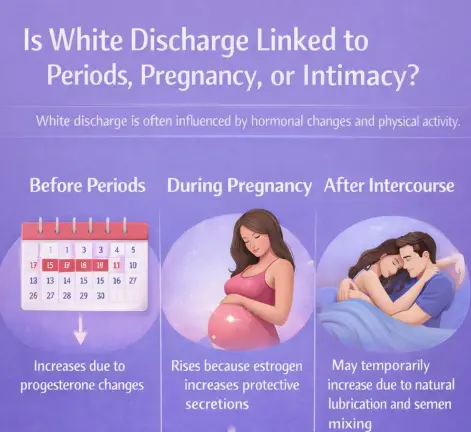
| Situation | Hormonal Trigger | Typical Discharge Change |
| Before periods | Rising progesterone | Thicker, creamy white |
| Pregnancy | Increased estrogen | More frequent, milky |
| After intercourse | Lubrication and semen | Temporary increase |
| Ovulation | Estrogen peak | Watery or slippery |
| Post-stress phase | Hormonal fluctuation | Short-term change |
Strongly, yes, as the vagina maintains its own protective balance. A vaginal pH imbalance allows harmful bacteria to grow. Overwashing, scented products, and internal cleansing disrupt this balance. Following safe vaginal hygiene practices, such as breathable underwear and gentle cleaning, helps preserve the natural defence.
Several myths cause women to ignore symptoms longer than they should. These beliefs often delay accurate diagnosis.
Occasional treatment may help short-term discomfort, while repeated self-treatment can mask the real cause.
Over-the-counter medications may temporarily reduce discharge without correcting the imbalance. This can delay diagnosis and allow underlying issues to persist quietly. Recurrent symptoms often need targeted treatment, not repeated suppression.
Signs that require attention include irregular patterns, discomfort, or fatigue. These symptoms of irregular discharge often lead women to seek clarity at a gynaecology treatment clinic, where evaluation remains simple and reassuring. Early medical intervention at Petals Family Clinic prevents repeated episodes and unnecessary worry.
Many women hesitate to seek care because they fear complex tests. In reality, evaluation is usually simple and focused on comfort.
A doctor first listens to patterns of symptoms, not isolated days. This is followed by a gentle examination, if needed, and basic tests only when required. Most cases are identified without invasive procedures or long waiting periods.
To know more, consult a doctor at Petals Family Clinic, our gynaecology treatment clinic in Kolkata.
Persistent changes deserve clarity, not guesswork. At Petals Family Clinic, experienced specialists offer compassionate evaluation and personalised treatment in a safe, confidential environment. If discharge changes are affecting comfort or peace of mind, early care can make all the difference.
To know more, book an appointment today at our gynaecology treatment clinic in Kolkata.
Is white discharge normal every day?
Yes, daily white discharge can be normal if it is mild-smelling and comfortable. It helps keep the vagina clean and protected. Changes in amount may occur with ovulation, stress, or lifestyle shifts.
When should you worry about white discharge?
Concern is needed if discharge changes colour, develops a strong smell, or causes itching or pain. Persistent changes lasting more than a few days should be evaluated by a physician.
What does abnormal white discharge look like?
Abnormal discharge may appear yellowish, grey, clumpy, or frothy. It often feels uncomfortable and may be associated with irritation or burning sensations.
Can stress increase white discharge?
Yes, stress can affect hormone balance and immune response. This can temporarily increase discharge even without infection.
Does white discharge always mean infection?
No, most white discharge is not caused by infection. Hormonal changes, pregnancy, or natural cycle variations are common reasons. Infection is suspected only when symptoms persist or worsen.
Is white discharge normal before periods?
Yes, discharge often increases before periods due to hormonal changes. It usually settles once menstruation begins and should not cause discomfort.

From the Desk of PDG | Honorary Medical Director
Welcome to Petals Health Clinics, a modern family clinic chain designed around Families.
As your partners in health, we take pride in fostering a warm, family-centred environment where every individual feels heard, respected, and cared for.
Our primary focus is on building and sustaining healthy families. We believe that prevention is the cornerstone of good health, and we are dedicated to helping you take proactive steps toward a vibrant and fulfilling life. Through preventive healthcare, regular disease screenings, early detection, and health education, we strive to empower you with the knowledge and tools to make informed decisions about your well-being.
Whether it’s routine checkups, guidance on managing chronic conditions, or personalized advice on lifestyle and wellness, our team is here to partner with you on every step of your health journey.
Thank you for trusting us to be a part of your family’s health story. Together, we can build a foundation for lasting health and happiness.



 9147405960


