May 8, 2026 | by Admin

A failed IVF cycle can feel like an emotional rollercoaster, and it’s understandable if you’re feeling overwhelmed. But don’t despair, because a failed IVF cycle isn’t the end of your journey — in fact, it’s just a detour on the road to success.
At Petals Health, a centre specialising in IVF treatment in Kolkata, we help patients find the best course of action after a failed IVF cycle.
It’s easy to feel like the world is crashing down after a failed IVF cycle, but it’s important to realise that you’re not alone. In fact, many couples undergo multiple IVF cycles before achieving their dream of parenthood. IVF failure doesn’t define your chances of success; rather, it provides valuable information to help guide your next steps.
After the emotional shock of the first failed attempt, you might wonder, Why did this happen? What now?

To help you navigate through this, let’s first clarify what constitutes a “failed IVF cycle.”
After a failed IVF cycle, you might feel inclined to try the same protocol again, but that may not always be the best course of action. IVF success depends on multiple factors like egg and sperm quality, embryo development, and the uterine environment. If nothing is changed after a failed cycle, the likelihood of success can be minimal. It’s essential to analyse what went wrong and consider adjustments to the IVF protocol.
While your emotions are still raw, it’s important to focus on what you can do immediately after a failed IVF cycle.
The first thing you should do is schedule a post-cycle review with your fertility doctor. This is your chance to understand the reasons behind the failure. Rather than simply offering reassurance, the doctor should focus on analysis — reviewing things like embryo quality, sperm factors, and your response to the stimulation drugs.
After a failed IVF cycle, it’s tempting to jump straight back in. However, it’s important to give your body and mind time to recover. Doctors generally suggest waiting a couple of months before starting the next cycle. The timeline is decided based on your medical history, emotional health, and fertility factors.
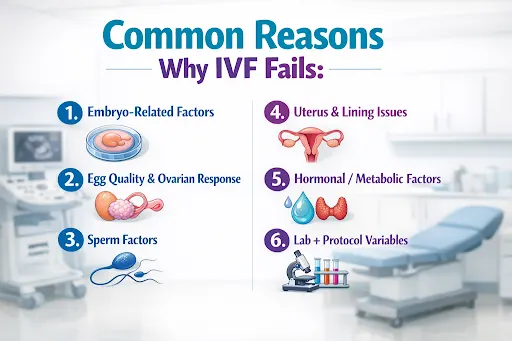
There are a number of reasons why IVF cycles fail. Understanding these causes can help demystify the process and guide you toward the right solution.
Embryo quality is crucial for IVF success. Chromosomal abnormalities in embryos are one of the leading causes of IVF failure. Advanced genetic testing, such as PGT-A, can provide insights into whether embryos are genetically viable.
The quality of eggs plays a key role in fertilisation. If the eggs aren’t viable, fertilisation won’t occur, or the embryo may fail to implant. Additionally, a poor ovarian response can lead to fewer eggs being retrieved, reducing the chances of success.
Male infertility, including sperm DNA fragmentation, can greatly affect fertilisation and embryo development. If this is suspected, further testing can help evaluate the sperm’s quality and DNA integrity.
A healthy uterus with a thick, receptive lining is essential for embryo implantation. Conditions like fibroids, polyps, and adhesions can hinder embryo implantation, leading to IVF failure.
Hormonal imbalances, like thyroid problems, elevated prolactin, or insulin resistance, can interfere with embryo development and implantation.
Sometimes, IVF failure can be attributed to external factors like the timing of stimulation drugs, trigger shots, and laboratory conditions during embryo culture.
It’s important to rely on experts who specialise in IVF treatment. Book a consultation today at Petals Health for comprehensive guidance.
After a failed IVF cycle, your doctor will likely recommend specific tests to understand what went wrong and how to improve the outcome in the next attempt.
Assessing ovarian reserve (AMH and AFC), thyroid and prolactin levels, and even checking for vitamin deficiencies can provide clues to why IVF failed.
If uterine issues are suspected, the doctor may recommend an ultrasound, hysteroscopy, or saline sonography to examine the lining and rule out any abnormalities.
Male infertility testing, such as repeating the semen analysis or conducting sperm DNA fragmentation tests, helps determine if sperm quality is a factor in IVF failure.
If chromosome abnormalities are suspected, PGT-A (Pre-implantation Genetic Testing for Aneuploidy) may be offered to test embryos before transfer.
If you’ve experienced multiple IVF failures with no viable pregnancies, you may be diagnosed with Recurrent Implantation Failure (RIF), and additional investigations can help pinpoint the cause.
After IVF failure, the next steps aren’t always clear. Here’s what you need to know:
If your doctor feels the IVF protocol can be improved, repeating IVF with modified protocols might be the right option.
ICSI can improve fertilisation rates, especially if male infertility is an issue.
A freeze-all strategy allows time for the uterus to recover and gives you better control over timing.
Genetic testing of embryos can increase the chance of a successful pregnancy, especially if genetic abnormalities are suspected.
If egg or sperm quality is an issue, using donor eggs or sperm may offer a solution.
In cases where the uterus cannot carry a pregnancy, gestational surrogacy may be an option.
Some couples opt for adoption as an alternative path to parenthood.
After a failed IVF, it might be worth getting a second opinion. When you do, make sure to carry all relevant documents:
A failed IVF cycle is not a failure in the traditional sense; it’s an opportunity to refine the process and enhance your chances of success. At Petals Health, we work closely with you to analyse the situation and craft a personalised plan for your next step after IVF treatment in Kolkata. Your dream of parenthood may take time, but with the right strategy, it is absolutely within reach.
Schedule a consultation today.
Yes, many couples conceive naturally after a failed IVF cycle, especially if IVF failure was due to issues that can be addressed.
It varies, but many couples require 3–4 cycles before success.
Not necessarily. Failed IVF can occur due to various factors unrelated to embryo quality.
It depends on the root cause of the failure, but lifestyle changes and protocol adjustments may help.
If chromosome abnormalities are suspected, genetic testing can be very helpful in improving the chances of success.
Fitness
Health Clinic
Gynecology
Pregnancy
Diabetes
Health
Health Tips
Arthritis
Allergy and Asthma
Menstrual Health
general
other
Cardiology
Geriatrics
Gastrointestinal
woman and child care
Infertility
Health Checkup
Cosmetic Gynaecology
Hymenoplasty
dermatology treatments
IVF Treatment
Fertility Treatment
Vaginal Rejuvenation

From the Desk of PDG | Honorary Medical Director
Welcome to Petals Health Clinics, a modern family clinic chain designed around Families.
As your partners in health, we take pride in fostering a warm, family-centred environment where every individual feels heard, respected, and cared for.
Our primary focus is on building and sustaining healthy families. We believe that prevention is the cornerstone of good health, and we are dedicated to helping you take proactive steps toward a vibrant and fulfilling life. Through preventive healthcare, regular disease screenings, early detection, and health education, we strive to empower you with the knowledge and tools to make informed decisions about your well-being.
Whether it’s routine checkups, guidance on managing chronic conditions, or personalized advice on lifestyle and wellness, our team is here to partner with you on every step of your health journey.
Thank you for trusting us to be a part of your family’s health story. Together, we can build a foundation for lasting health and happiness.



 Ask a Doctor
 9147405955


